Tuesday, 28 February 2012

Filming scene 1 part 1

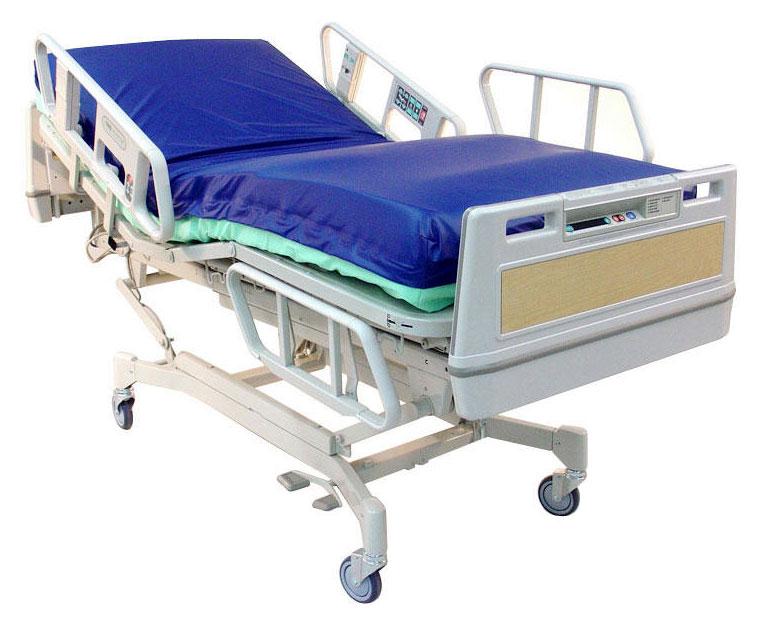
These are some screenshots that I took from my footage of scene 1 part 1 in the hair and beauty section of Woods Browning, which I made to look like a hospital. I only used one camera in the end, although I had two more at my disposal. I only used one because I knew this was a very short scene and I could easily just create continuity easily. I didn't use my own camera, I used photography's Canon 5D mk II, which has 21 megapixels in relation to my 60D's 18 megapixels. I also used the department's Manfrotto tripod which had an excellent smooth head for tilting and panning, which I then mounted onto some wheels to create a smooth panning shot without having to set up a jib or track.


I was very pleased with the acting for this scene, as I though Derek did a fantastic job of dying because some actors can portray death very dramatically, but although quite dramatic, I thought it was a very cinematic moment which I thought worked really well with the intimate and close camera shots that I chose. I stuck to the storyboard slightly, but I also decided to experiment with focus pulling up the bed too. When it comes to the editing, I know that I might use as little as two shots for this scene, but having lots of footage is going to help if some of the shots I have aren't decent enough or I need more variation.

Tuesday, 21 February 2012

Filming scene 2

These are some screenshots that I took from my footage of scene 2 in the woods. It was a relatively straight forward one camera shoot, but I spent a lot of time trying to think about how to create continuity with Jake's movement in the scene. I stuck to my storyboard as much as I could, but in the end I changed a few shots that I thought were necessary and added some in that I felt had to be included. I feel that it is better to have too much footage when going into the editing process than not enough. Making sure the theme flowed smoothly was time consuming, but worth it in the end, as I think the shots that I have chosen below have good framing, such as following the rule of thirds to create interesting composition.


 This scene was simply done with a one camera shoot, because it is as if the Elder is narrating over what is happening, so I didn't really need two cameras at the same time. For other scenes such as the hospital one, I need two camera to consistently create a good sense of continuity through fast paced dialogue between characters. I also took a few nature and weather shots incase I needed to take the sound of the clips and lay them into the background to make the dialogue less jumpy and stand out in the editing process.

I think that this is a good start to filming my film, and if the rest of the scenes that I shoot go as well as this, then I think that this film will be successful!

Saturday, 18 February 2012

Equipment Lists

These are my equipment lists that I have made for each scene, showing what I need to bring with me to each location to help create a professional, high quality film:

Scene 1 (part 1)

Canon 60D
Tripod on wheels
TASCAM BB-800
Rode NTG-2 Shotgun Microphone
XLR to XLR cable
1gb SD card
32gb SD card
Boom pole

Scene 1 (part 2)

Canon 60D
Canon 600D
2x tripods
TASCAM BB-800
Rode NTG-2 Shotgun Microphone
XLR to XLR cable
1gb SD card
16gb SD card
32gb SD card
Boom pole

Scene 2

Canon 60D
Manfrotto Modosteady
Opteka Video Stabilizer
Tripod
TASCAM BB-800
Rode NTG-2 Shotgun Microphone
XLR to XLR cable
1gb SD card
32gb SD card
Boom pole

Scene 3

Canon 60D
Canon 600D
Canon 5D mk II
Tripod on wheels
2x other tripods
TASCAM BB-800
Rode NTG-2 Shotgun Microphone
XLR to XLR cable
1gb SD card
16gb SD card
32gb SD card
8gb Compact flash card
Boom pole

Scene 4

Canon 60D
Canon 600D
2x tripods
TASCAM BB-800
Rode NTG-2 Shotgun Microphone
XLR to XLR cable
1gb SD card
16gb SD card
32gb SD card
Boom pole

Lots of this equipment is owned by myself, but I will also borrow various equipment from the media  and photography departments in school. 


Gauntlett goes to say that new media (and new media technologies) erodes the boundary between producer and audience to the extent that it makes little sense to talk about media audiences at all anymore: “Conventional research methods are replaced—or at least supplemented by new methods which recognise and make use of people's own creativity, and brush aside the outmoded notions of 'receiver' audiences and elite 'producers' (Gauntlett, 2007) This consequently erodes the boundary between the producer and the consumer, which is relevant through all my technology that I am using to shoot my film that wouldn't have been remotely available two years ago. I am lucky to be able to get my hands on this equipment, as some of it is rather expensive, but in relation to a fully budgeted feature film, the price of this equipment would be very minimal.

Filming Dates

Now that I know all of my actors are onboard, I need to sort out when I can get them at different locations on different days to complete my filming. Unlike a budgeted film, my actors aren’t actually getting paid money to star in my film, so I am worried that there might be a lack of incentive to work or make time to come and film with me. I will have to see how this plans out. But for now I have drawn up a list of dates for filming each scene in each location:

Scene 1 part 1
27th February
Hospital/Hair and Beauty/Woods Browning

Scene 1 part 2 and scene 4
29th February
Industrial Unit/Woods Browning

Scene 2
20th February
Respryn Woods

Scene 3
1st March
Hospital/Hair and Beauty/Woods Browning

Wednesday, 15 February 2012

Prop list


As a main part of mise en scene, props are a key aspect to consider when making a film. For instance, a period drama would need to have archaic items to create verisimilitude. But apart from creating realism and believability, props will also help support your narrative, for instance a dead rabbit is essential for my woods scene. Although I want to keep my props and scenery relatively low key, I want to create realism without having to try and create a particular time period. The following lists contain what props I will need for each scene:

Scene 1 part 1 (Hospital)

Hospital bed
Bedsheets
Lamp
Medical equipment
Wire chair

Scene 1 part 2 (Empty space)

Fold out camp bed
Bedheads
Pillow

Scene 2 (Woods)

Fake blood
Dead rabbit
Stones

Scene 3 (Hospital)

Hospital bed
Bedsheets
Lamp
Medical equipment
Wire chair

Scene 4 (Empty space)

Fold out camp bed
Bedheads
Pillow

Sunday, 12 February 2012

How I made my production company logo


This is a brief video consisting of screenshots which show how I created my production company logo in Adobe After Effects CS3.

Saturday, 11 February 2012

Distribution

When researching into film distribution, I stumbled upon an article written by David Sim from the BFI, which briefly explains some techniques of film distribution and briefly explores vertical integration. Sim goes to explain:

“Distribution is about releasing and sustaining films in the market place. In the practice of Hollywood and other forms of industrial cinema, the phases of production, distribution and exhibition operate most effectively when 'vertically integrated', where the three stages are seen as part of the same larger process, under the control of one company. In the UK, distribution is very much focused on marketing and sustaining a global product in local markets.

In the independent film sector, vertical integration does not operate so commonly. Producers tend not to have long-term economic links with distributors, who likewise have no formal connections with exhibitors. Here, as the pig-in-the-middle, distribution is necessarily a collaborative process, requiring the materials and rights of the producer and the cooperation of the exhibitor to promote and show the film in the best way possible. In this sector, distribution can be divided into three stages - licensing, marketing and logistics.”

This is an interesting article, and it links to my production and leads me to the question ‘How will I distribute my film?’ A short film like mine would be released through the BBC with their short film scheme, or Film4 who are the same. Both of these companies independently fund British films, shorts and features, with both being vertically integrated. Film4 would have been the company that I would have tried to get funding from, so I feel that they would be the company to distribute them too, especially as it is part of their vertical integration system. As an independent filmmaker I will also upload my film to websites such as Vimeo and Youtube so that a community of other filmmakers and the public could watch my product and I wouldn’t be paying a fee, I wouldn’t be receiving money for my film too though, but because I didn’t actually pay much money for it anyway this doesn’t matter.